Introducing
High Early Cash Value
Life Insurance
Understanding Permanent Life Insurance and Cash Value
The primary purpose of life insurance is to provide a death benefit. Certain permanent life insurance policies may also accumulate cash value over time. Policy cash value may be accessed through loans or withdrawals, subject to policy terms, interest charges, and risks.
This page provides general educational information about how life insurance protection and policy cash value may be considered in connection with mortgage protection objectives. It does not guarantee that a mortgage will be repaid early or that a particular result will be achieved.
Check out this one minute video to learn more!
Approval #: CRN202909-12152439 | All Rights Reserved © 2026
The Mortgage Reduction concept described on this website is a general educational planning concept. Any life insurance policy used in connection with this concept is subject to underwriting, policy terms, costs, charges, and performance. Policy loans and withdrawals may reduce policy cash value and death benefit, increase the risk that the policy will lapse, and may result in tax consequences. Guarantees are based on the claims-paying ability of the issuing insurance company. Results are not guaranteed and will vary based on individual circumstances.

Mortgage Protection and Life Insurance

Some homeowners are interested in understanding how life insurance may fit within a broader conversation about family protection and mortgage obligations. If a life insurance policy remains in force and the death benefit exceeds the outstanding mortgage balance, beneficiaries may have funds available that could be used to help satisfy the mortgage or other family obligations.
Certain permanent life insurance policies may also accumulate cash value. A policyowner may choose to access available cash value through a policy loan or withdrawal. Loans and withdrawals reduce policy cash value and death benefit, accrue interest, may increase lapse risk, and may result in tax consequences.
Whether this concept is appropriate depends on individual protection needs, underwriting, affordability, policy design, policy performance, loan activity, and tax considerations. Results are not guaranteed.
A Typical 30-Year Mortgage Schedule!
First let’s take look a typical 30-year $150,000 mortgage with a 6% interest rate.

This example is hypothetical and is provided for illustrative purposes only. Actual results will vary and are not guaranteed. Policy values, if shown, are subject to policy terms, premiums, costs, charges, dividends, loan interest, and other factors. Policy loans and withdrawals reduce cash value and death benefit and may increase the risk of policy lapse. Source: Standard mortgage amortization chart on the internet.
Your Mortgage Reduction Schedule!
Utilizing this concept, you can see that on the 19 year you can successfully use cash-balance to pay off your mortgage IN FULL!

This example is hypothetical and is provided for illustrative purposes only. Actual results will vary and are not guaranteed. Policy values, if shown, are subject to policy terms, premiums, costs, charges, dividends, loan interest, and other factors. Policy loans and withdrawals reduce cash value and death benefit and may increase the risk of policy lapse. Source: Standard mortgage reduction chart on the internet.
Now let’s combine the two!
Now let’s see what the *cash balance for a typical Mortgage Reduction schedule looks like for a hypothetical client.
*Cash Balance refers to money put aside. Clients independently decide which cash savings instrument suits them. Everyone decides their appropriate option.
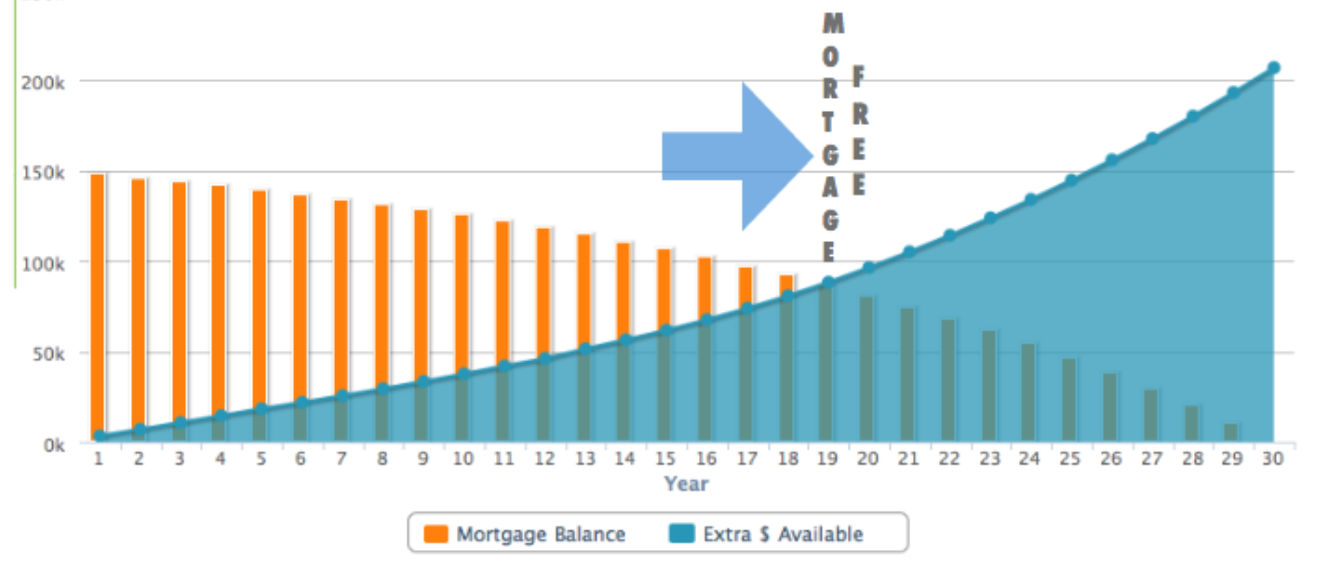
This example is hypothetical and is provided for illustrative purposes only. Actual results will vary and are not guaranteed. Policy values, if shown, are subject to policy terms, premiums, costs, charges, dividends, loan interest, and other factors. Policy loans and withdrawals reduce cash value and death benefit and may increase the risk of policy lapse.